![Natural Elements as Part of Registered Designs: Osaka District Court Decision on Vegetated Soil Bags | ONDA TECHNO Intl. Patent Attys.[Japan Patent Firm] | Gifu City](/wp/wp-content/themes/standard_en/images/common/logo.svg)
![Natural Elements as Part of Registered Designs: Osaka District Court Decision on Vegetated Soil Bags | ONDA TECHNO Intl. Patent Attys.[Japan Patent Firm] | Gifu City](/wp/wp-content/themes/standard_en/images/common/logo-sm.svg)
2026.07.08
Natural Elements as Part of Registered Designs: Osaka District Court Decision on Vegetated Soil Bags
Osaka District Court, January 23, 2025 (Case No. Reiwa 5 (Wa) 2668)
In a January 2025 decision, the Osaka District Court addressed an interesting issue in Japanese design law: how should a registered design be assessed when part of the design consists of a natural element? Although the court ultimately rejected the design infringement claim, the case is useful in design practice because it includes a discussion of how natural elements depicted in design drawings should be interpreted under a similarity analysis.
The dispute concerned vegetated soil bags used for slope protection. The plaintiff co-owned two registered designs for soil bags. The defendant manufactured and sold soil bags for vegetation use. The defendant’s product was sold as a bag before soil was filled into it and before any grass had grown. For that reason, the plaintiff relied on indirect infringement under Article 38 of the Japanese Design Act. The plaintiff argued that, once the defendant’s product was filled with soil and used in the ordinary manner, it would become a vegetated soil bag similar to the registered designs.
|
Registered design 1 |
Registered design 2 |
|
Design Registration No. 1531256 |
Design Registration No. 1531255 |
 |
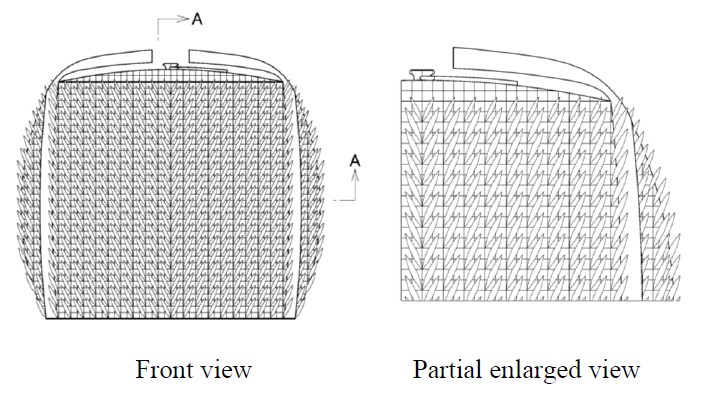 |
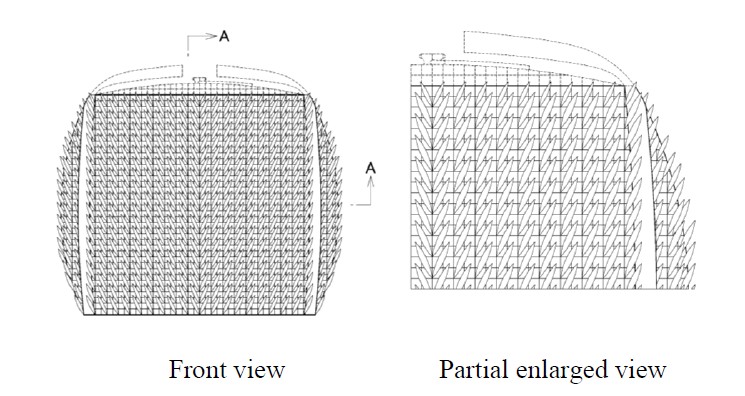
Figure 1. Registered designs (Design Registration Nos. 1531256 and 1531255).
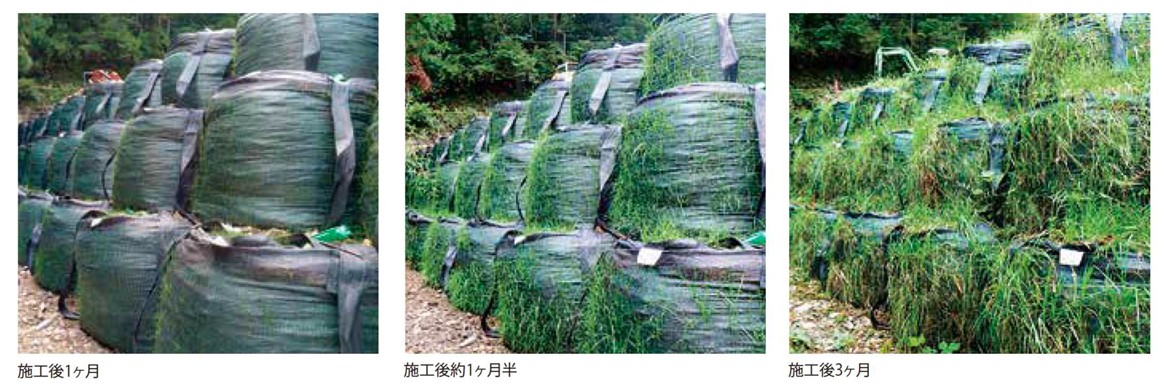
Figure 2. Defendant’s soil bags after installation.
Source: Defendant’s product webpage “Green Scrum 2407”
The court’s interpretation of the grass in the drawings
The first issue was how the “grass” shown in the registered designs should be understood. The court did not treat the grass as irrelevant simply because it was a natural element. In light of the article name and the description in the design gazette, the court found that the grass formed part of the registered designs.
The court also noted that a design protected under Japanese design law must be industrially applicable. To be industrially applicable, the design must be capable of being produced in technically identical form by industrial means. On this basis, the court held that even when a design uses a natural element, the shape of the grass included within the scope of the design right should be identified as a design feature with a certain degree of regularity and reproducibility.
This was an important point in the case. The court did not exclude grass from the registered designs merely because grass is natural. However, it also did not treat naturally grown grass on the defendant’s product as automatically equivalent to the grass shown in the registered design drawings. The grass shown in the drawings was treated as a specific visual feature of the design.
The next issue was the condition in which the defendant’s product should be compared with the registered designs. The plaintiff argued that the comparison should be made after the bags had been installed outdoors and a certain period of time had passed. The defendant argued that the comparison should be made at the time when the bag was filled with soil and installed.
The court accepted that the defendant’s soil bag should be considered in a state where seeds inside the bag had germinated and grass had grown outward from the outer surface. In other words, the court did not limit the comparison to the bag before any grass appeared. However, the court did not accept the plaintiff’s argument that the grass on the defendant’s soil bag should be assumed to have the same uniform length and arrangement as the grass shown in the registered designs. The actual condition of the defendant’s grass had to be identified based on the evidence.
The court then considered similarity. It found that the relevant consumers, such as civil engineering contractors, would pay attention mainly to the front side of the soil bag, namely the side opposite the slope, because these bags are stacked on a slope. Since the article was a vegetated soil bag, the court also found that the consumers would pay particular attention to the shape of the grass on the front side. The court therefore held that, at least, the shape of the grass was an essential feature of the registered designs.
This finding led to the conclusion of non-similarity. According to the court, the grass in the registered designs extended diagonally upward from the mesh surface and leaned in relatively regular directions. By contrast, the grass on the defendant’s soil bag grew outward from the mesh, but its tips generally drooped under their own weight. The court also found differences in length and growth condition.
The court acknowledged that there were common features between the registered designs and the defendant’s soil bag, including the substantially cubic shape, the mesh outer surface, the fabric bottom, and the hanging belts. Nevertheless, it held that the difference in the shape of the grass was significant. These common features did not overcome that difference. As a result, the court found that the defendant’s soil bag was not similar to either registered design.
Practical implications for design filings
The decision is useful because it contains careful discussion of both sides of the issue. A natural element can form part of a registered design. However, once that natural element is shown in the drawings, its specific appearance may also become relevant when similarity is assessed. The fact that the element is natural does not necessarily mean that variations in its actual growth will be disregarded.
This point is particularly important when filing a design application that includes plants or other natural elements. If grass, leaves, flowers, stones, or similar natural elements are shown by solid lines in the drawings, their shape, direction, density, or other visual details may later be treated as part of the design. Where natural variation is expected, applicants should consider carefully what they want to protect. The focus may be the detailed shape of the natural element itself. Alternatively, the focus may be its position, area, or relationship with surrounding artificial structures.
The Japanese Design Examination Guidelines contain specific provisions on natural elements in relation to building designs and interior designs. For example, in certain circumstances, plants or stones fixed to a building or land may be treated as forming part of a building design. In the similarity analysis for such designs, shapes created by nature itself, such as the shape of branches, leaves, or flowers, are not treated as features of the design. Similar guidance is also provided for interior designs.
The design in this case, however, concerned a product, rather than a building or an interior. Therefore, the treatment of natural elements in the JPO Examination Guidelines for building and interior designs did not mean that, even at the examination stage, the specific shape of the grass in this product design should be disregarded in assessing similarity.
In practice, applicants should consider at the filing stage how the natural element should be shown. Depending on what is intended to be protected, it may be appropriate to claim the natural element in detail, exclude it from the claimed design by using broken lines, or present it only in reference views or use-state drawings.
Overall, this decision provides a helpful example for design practice. It does not summarily say that natural elements cannot be protected. Rather, it shows that when natural elements are included in a registered design, their depiction in the drawings may play an important role in defining — and sometimes limiting — the scope of protection.
 Facebook
  LinkedIn
 X
X
 YouTube